October 26, 2026
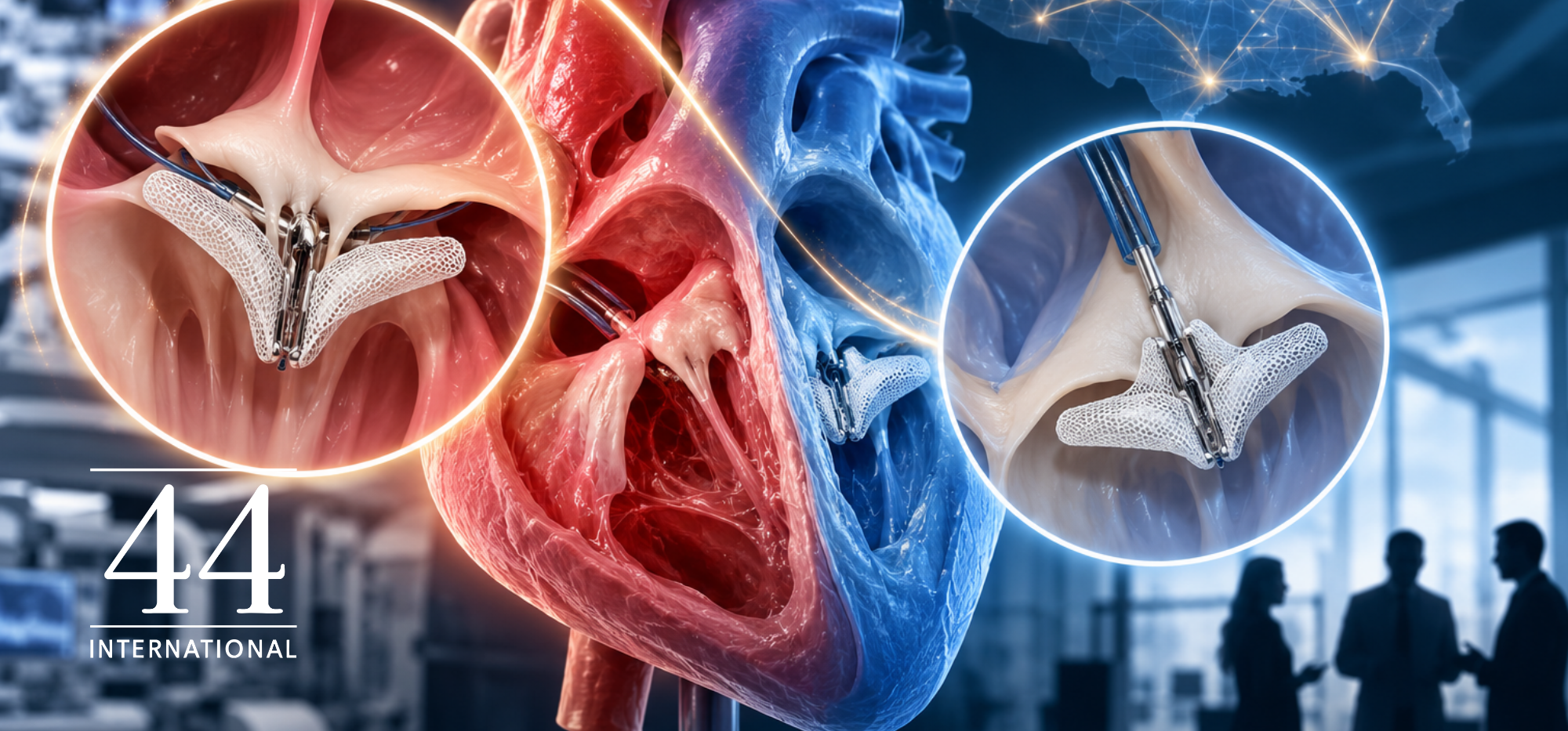
On 21 October 2026, Edwards Lifesciences announced that the FDA had approved its Pascal Precision system for transcatheter tricuspid valve repair. With that approval, Edwards says it is now the only company offering both repair and replacement transcatheter therapies for the mitral and tricuspid valves in the United States.
For structural heart commercial teams, this is more than another indication. The job is shifting from selling one device into one procedure to helping a heart team choose the right therapy for each patient. That shift changes how US structural heart businesses sell, and it changes who they need to hire.
Pascal Precision is now indicated to improve quality of life and functional status in patients with symptomatic severe tricuspid regurgitation (TR) despite optimal medical therapy. Patients must be at intermediate or greater surgical risk, and a multidisciplinary heart team must judge them appropriate for transcatheter edge-to-edge tricuspid repair (T-TEER).
The device is not new to US cath labs. The FDA first approved Pascal Precision for degenerative mitral regurgitation in September 2022, and it has carried a CE Mark for tricuspid use in Europe since October 2020. Edwards said one-year results from its CLASP IITR pivotal trial will be presented as a late-breaking study at TCT 2026 in San Diego.
The timing matches what Edwards told investors in July, when it said it expected a US tricuspid approval and launch in the fourth quarter. On the same day, Edwards also announced FDA approval of Pascal Ace with Capture Clarity for degenerative mitral TEER. Edwards says it is the first FDA-approved TEER device with fluoroscopic indicators that confirm when the valve leaflets have been grasped.
Edwards now has an FDA-approved transcatheter option in all four mitral and tricuspid categories. Abbott, its main competitor in this market, has three of the four.
| Category | Edwards | Abbott |
|---|---|---|
| Mitral repair (TEER) | Pascal (approved 2022) | MitraClip |
| Mitral replacement | Sapien M3 (approved late 2025) | Tendyne |
| Tricuspid repair (TEER) | Pascal (approved October 2026) | TriClip (approved April 2024) |
| Tricuspid replacement | Evoque (approved February 2024) | No FDA-approved device |
In tricuspid repair, Edwards arrives about two and a half years after Abbott's TriClip. That means many experienced US tricuspid centres will already be using a competing clip.
Leerink Partners analysts told investors the approval should strengthen Edwards' position in what they described as a large and underpenetrated transcatheter tricuspid market. They also noted that clinicians can now choose between Pascal and Evoque. Edwards made the same point, saying the broader portfolio lets clinicians select the most appropriate therapy for each patient.
The business behind this is growing fast. Edwards' transcatheter mitral and tricuspid therapies (TMTT) sales were $195.9 million in Q2 2026, up 44.8% on a constant currency basis. In July, the company raised its full-year 2026 TMTT sales guidance to $760 million to $780 million.
US tricuspid therapy is reimbursed under some of the tightest rules in structural heart, which shapes where and how these devices can be sold.
Medicare covers both transcatheter tricuspid replacement and T-TEER, but only under Coverage with Evidence Development (CED). CMS finalised its national coverage determination for tricuspid replacement in March 2025, and its T-TEER coverage took effect on 2 July 2025. For T-TEER, CMS covers the procedure only when it is performed within a CMS-approved study. The patient must be cared for before and after the procedure by a heart team that includes, at minimum, a cardiac surgeon, an interventional cardiologist, a heart failure cardiologist and an interventional echocardiographer. All of them must have experience treating TR.
When CMS announced the T-TEER decision, it named Abbott's TRICARE study as meeting the CED requirements. We could not find a public statement confirming a CMS-approved study covering Pascal for tricuspid repair. Commercial teams should treat Medicare access for Pascal in tricuspid as something to watch closely.
The practical result is a market built centre by centre. Edwards described its own approach for Evoque in July: expand into new centres, deepen use in existing ones and streamline patient screening. Those same steps now apply to Pascal in tricuspid, inside hospitals that must already have a qualified heart team in place.
The biggest change is that the sale moves from one device to one patient decision. When a centre has access to both tricuspid repair and tricuspid replacement from the same company, the commercial conversation is about which therapy fits each patient's anatomy and clinical picture. At a Deutsche Bank investor conference on 16 September, Edwards CEO Bernard Zovighian said heart teams send patients' echo and CT scans to Edwards, whose team analyses them and recommends Pascal, Evoque or Sapien M3. That shows how closely imaging and therapy selection are now tied to the commercial process.
The buyer is also a team rather than a single physician. With CMS requiring a four-specialty heart team for T-TEER, structural heart reps need credible relationships with cardiac surgeons, interventional cardiologists, heart failure cardiologists and imaging specialists, not just the implanter.
In tricuspid repair, Edwards is the challenger. With TriClip established since 2024, winning T-TEER business at existing tricuspid centres will mean competitive conversion, physician training and strong case support, alongside opening new centres.
Finally, the pathway to a procedure runs through referrals. Every eligible patient must first be identified and assessed by a qualified heart team, so case volume depends on how well patients are found and routed to those teams. The commercial teams that grow fastest are likely to be those that help centres find, screen and refer appropriate patients earlier. This is 44 International's view, based on how the coverage rules and heart team requirements shape the market.
The clearest signal comes from Edwards' own job postings. Its careers site lists TMTT Field Clinical Specialist roles supporting Evoque tricuspid replacement cases in US territories including Texas, the Carolinas, Los Angeles, Boston, Philadelphia and Chicago. These roles provide real-time guidance during implants and train clinical staff on the devices. The postings ask for five to seven years of clinical or medical device experience, and several highly prefer hands-on intraprocedural structural heart imaging or cardiac sonography credentials (RDCS/RDS). Listings for the Chicago and Boston roles on CareerBuilder show a pay range of $124,000 to $149,000 a year.
One line in the Dallas posting stands out. It says Edwards hires Field Clinical Specialists to support a specific therapy or device within the TMTT portfolio, to allow focused onboarding and deep clinical expertise. A new tricuspid repair indication for Pascal points to more of these device-specific roles.
Edwards has done this before. In Q3 2024, it said its higher selling, general and administrative expenses reflected an expansion of field-based personnel to support the launch and rollout of Pascal and Evoque.
In our view, demand across US structural heart is likely to grow for these profiles:
These are 44 International's views on where demand is heading, not roles Edwards or its competitors have announced.
Edwards' Pascal Precision approval completes a portfolio that covers repair and replacement in both the mitral and tricuspid valves. It also turns US tricuspid care into a market where companies sell a choice of therapies to a heart team, under strict Medicare coverage rules and against an established competitor.
For structural heart companies, that puts a premium on clinical specialists with imaging and TEER experience, commercial leaders who can sell to a whole heart team, and the access and referral talent that keeps centres growing. For candidates with those skills, the US tricuspid market is opening real new opportunities.
44 International works with US MedTech companies building structural heart commercial and clinical teams, and with the professionals who drive them. If you are hiring for this market, or exploring your next role in it, let's talk.

© All rights reserved